Export-Ready Wireless & Multifunctional Extension Stations
Tested in our TÜV Rheinland-verified testing laboratory. All models support custom tooling, NEMA 5-15R / Type-B conversions, customizable GaN wattages, and private-label packaging.
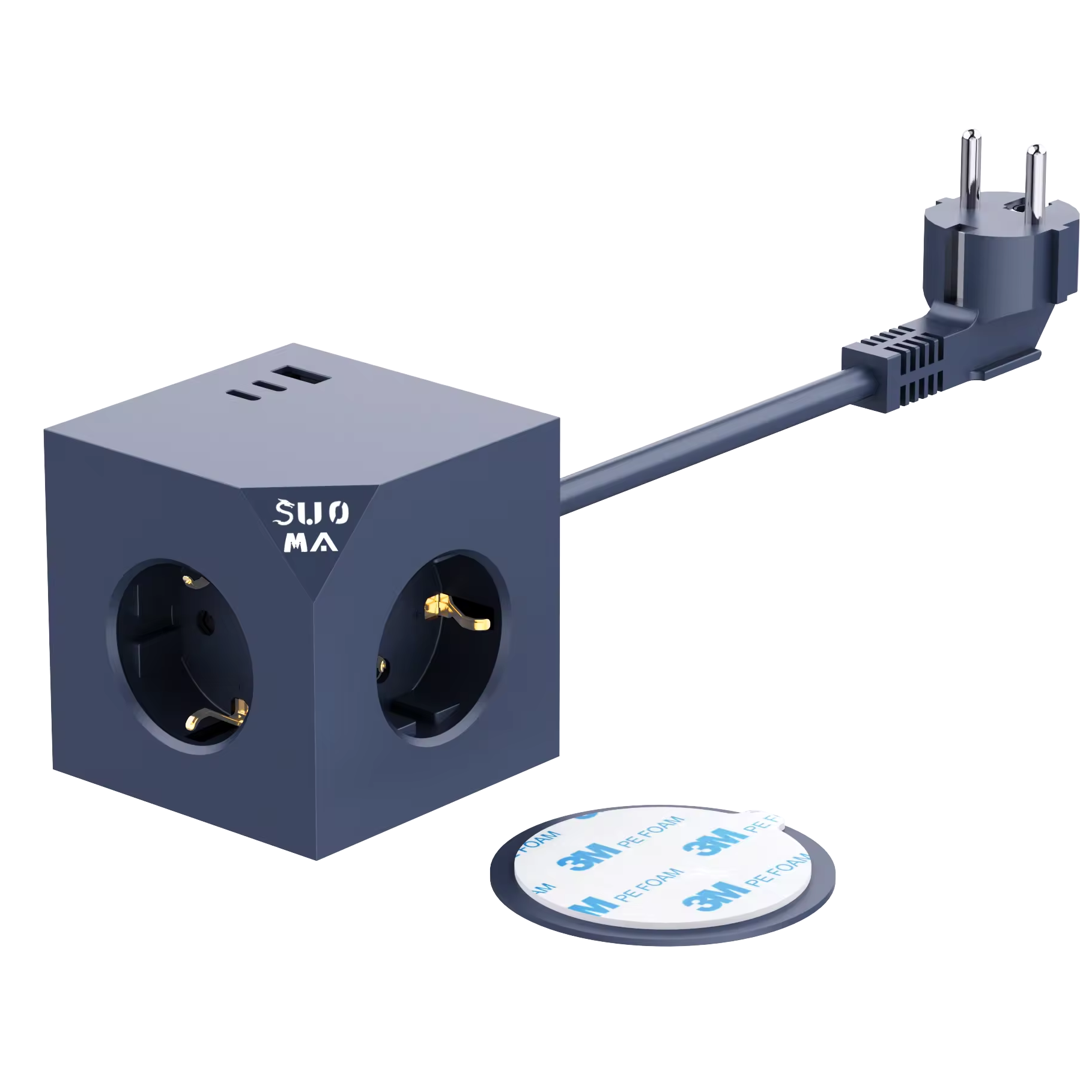
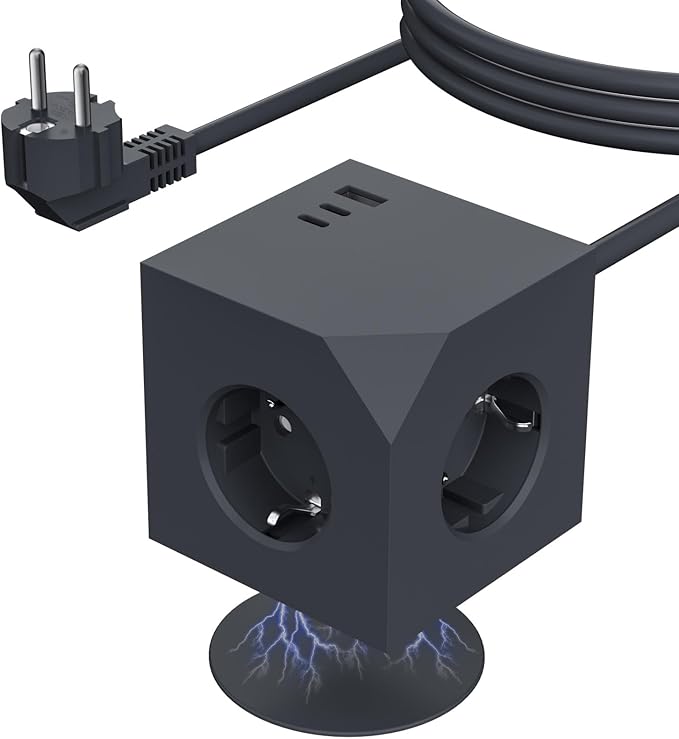
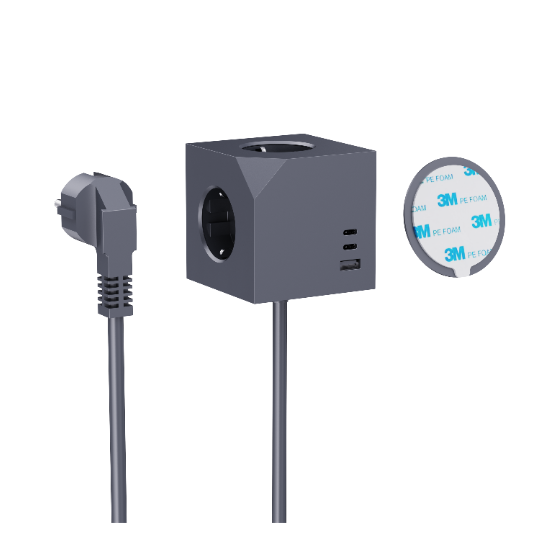
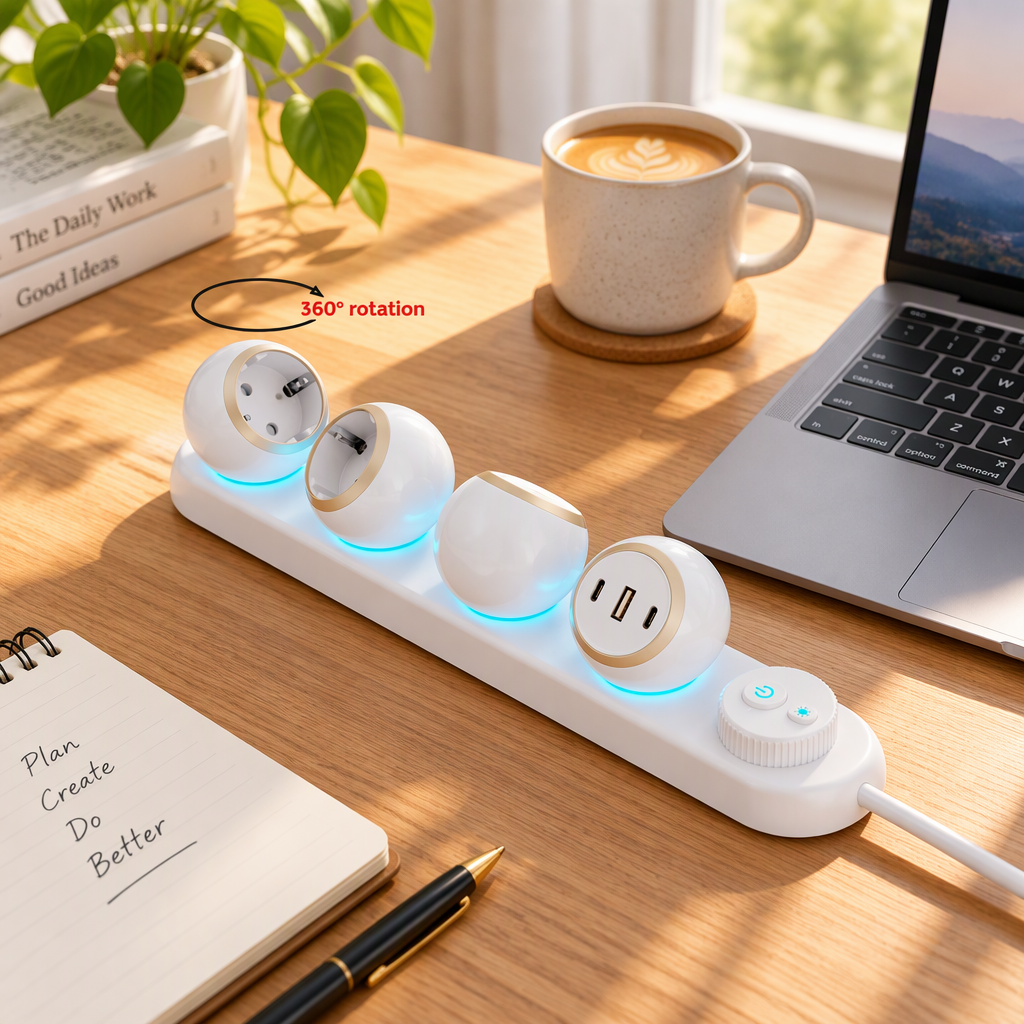
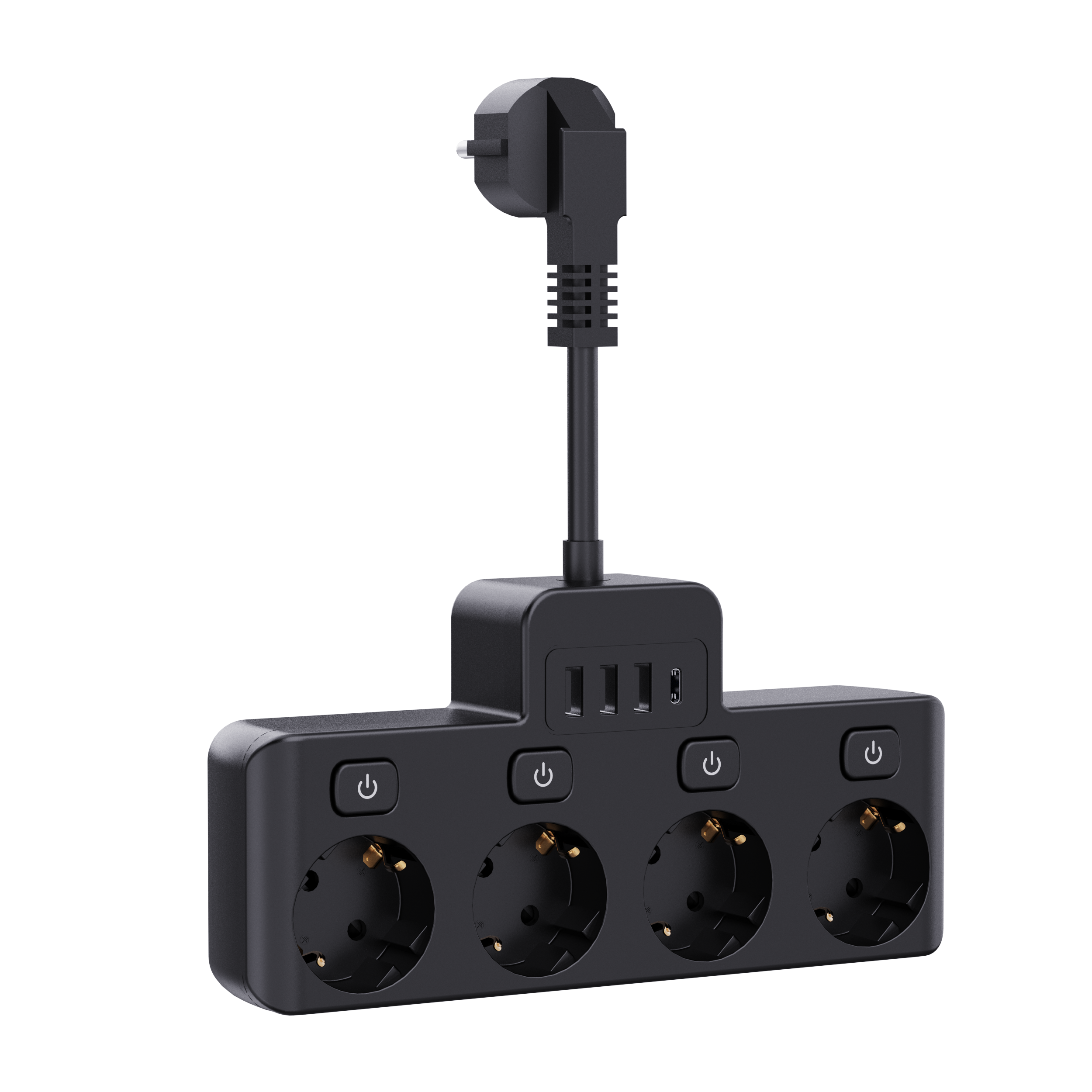
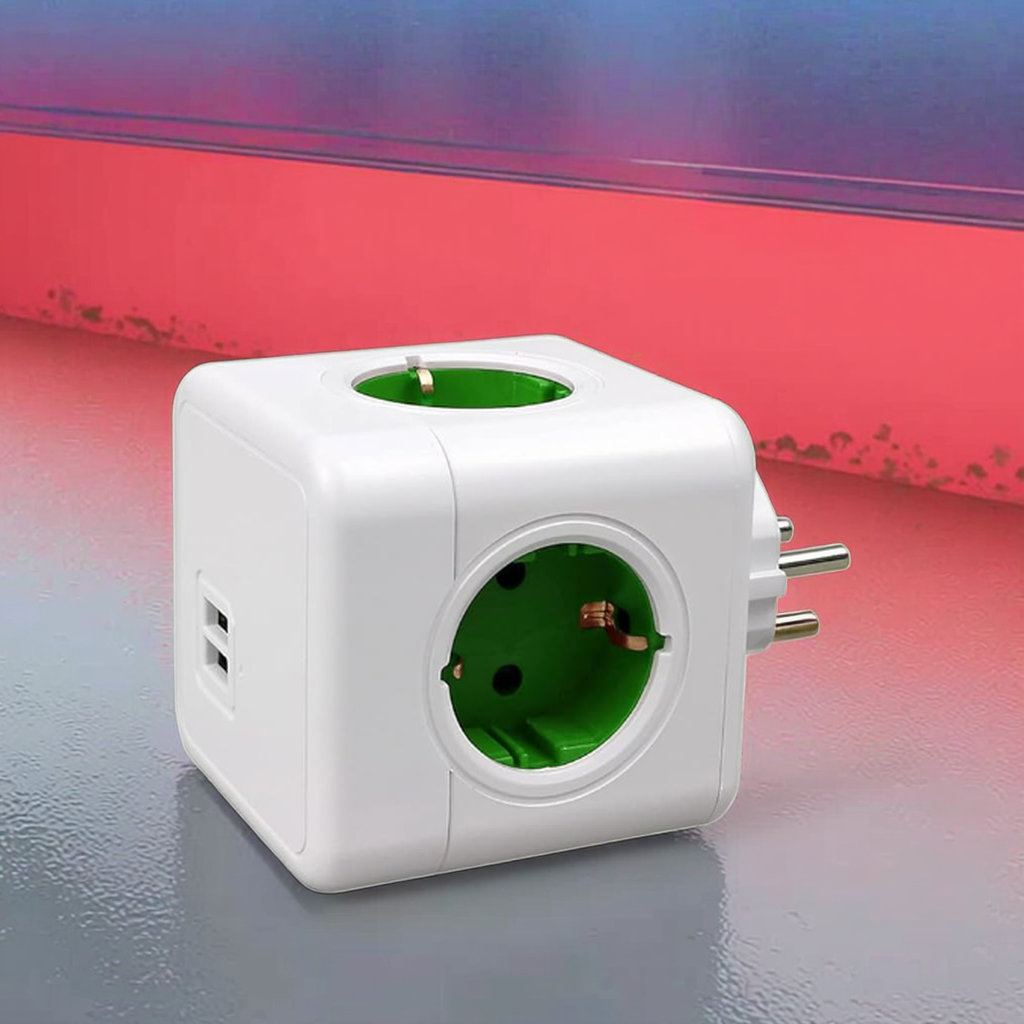
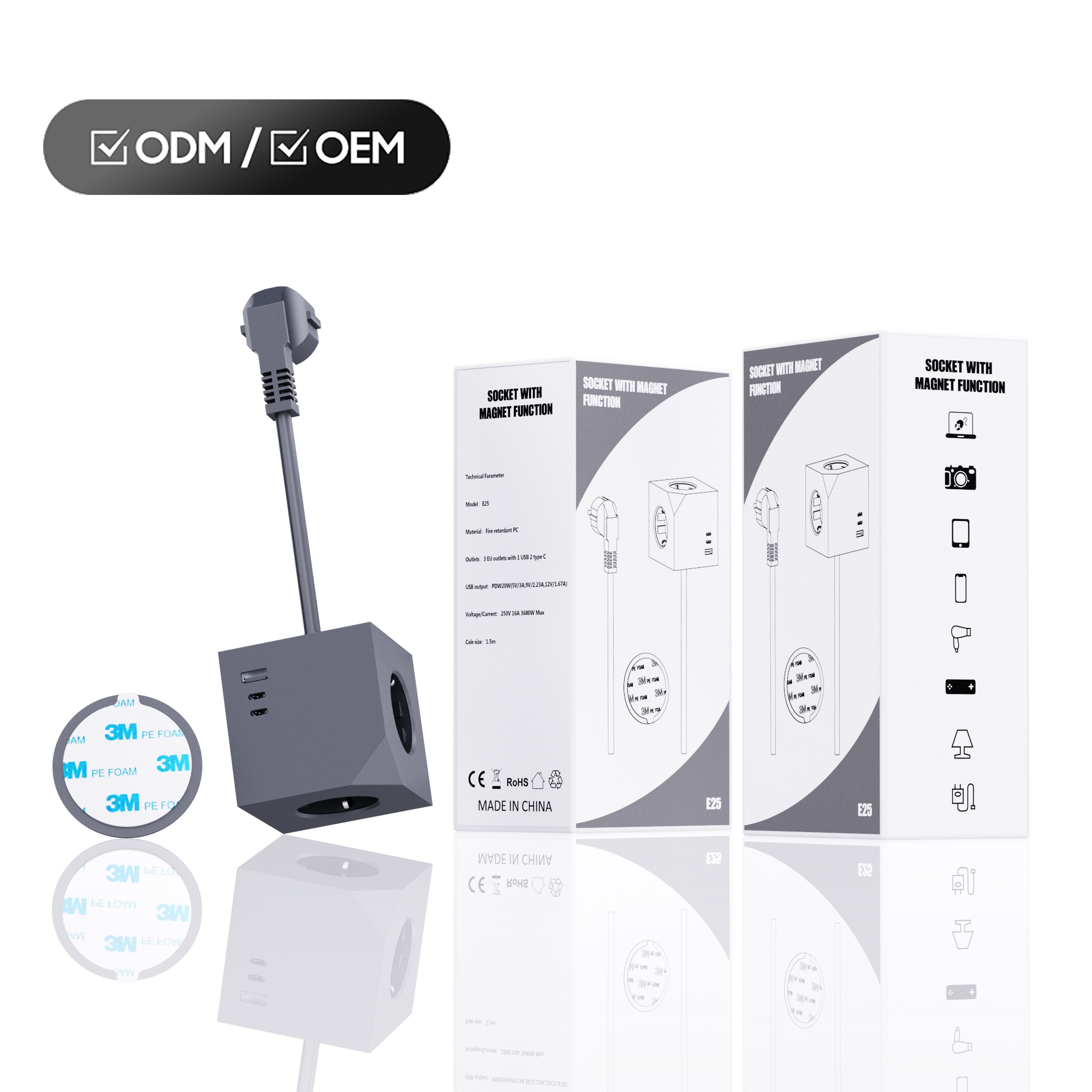
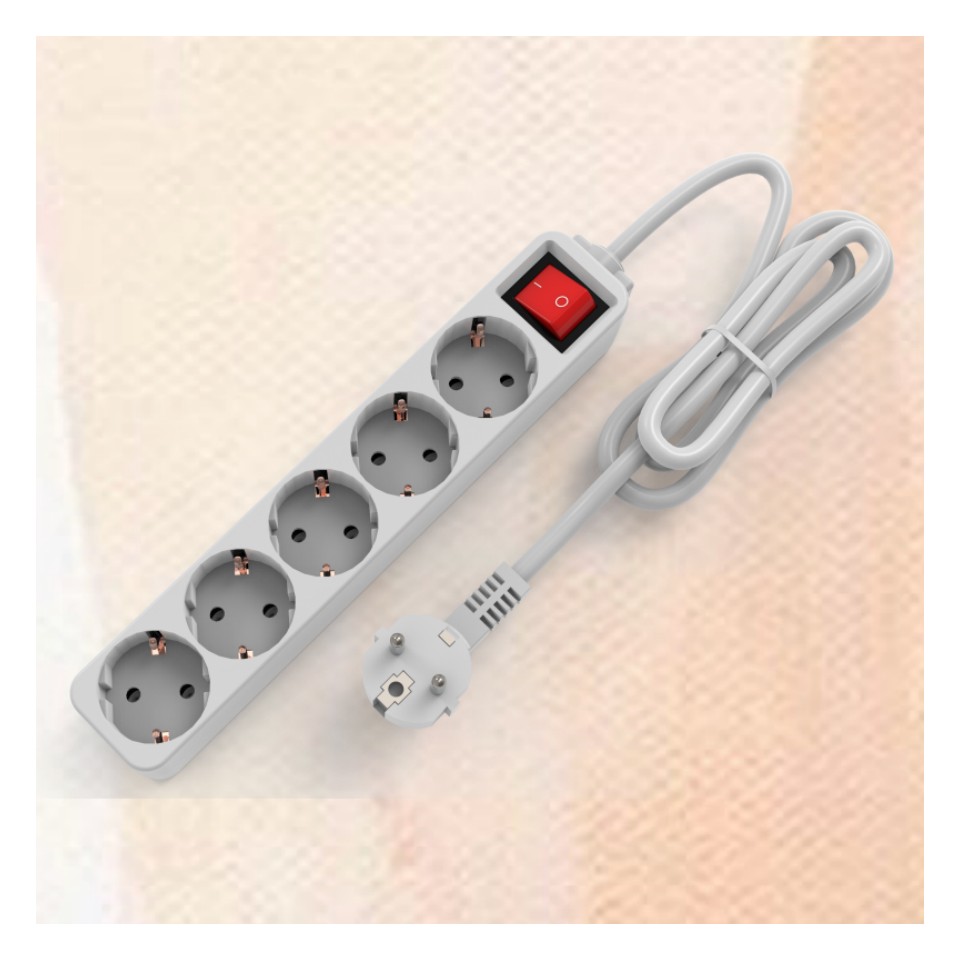
Engineering Architecture: High-Yield Inductive Power & AC Distribution for the U.S. Market
The convergence of consumer electronics, high-wattage mobile charging protocols, and hybrid office architecture has structurally altered how North American enterprises and commercial facilities consume localized electrical power. For decades, the ubiquitous extension lead remained an uninspired commodity—a stamped copper busbar encased in PVC with rudimentary bi-metallic rocker circuit breakers. However, the aggressive rollout of the Wireless Power Consortium (WPC) Qi2 standard, coupled with dense GaN (Gallium Nitride) semiconductor power stages, has elevated the desktop extension socket into an electro-mechanically sophisticated sub-assembly.
Ningbo Sykra Technology Co., Ltd. operates at the nexus of high-voltage AC safety engineering and high-frequency DC inductive charging. When developing wireless charging extension sockets for enterprise procurement in the United States, simple re-casing is insufficient. The American regulatory ecosystem demands absolute compliance with UL 1363 (Relocatable Power Taps), UL 1449 (Surge Protective Devices), UL 62368-1 (Audio/video, information and communication technology equipment safety), and strict FCC Part 15 / Part 18 Class B electromagnetic emissions verification. Below, we articulate the engineering paradigms required to deploy reliable, high-margin, and fire-safe wireless extension sockets into the U.S. supply chain.
Inductive Coupling Thermodynamics & Electromagnetic Shielding (EMI/EMC)
Deploying a 15W Qi-certified or Magnetic Power Profile (MPP) transmitter coil directly adjacent to high-draw AC lines (125V~ 15A 1875W continuous duty) introduces formidable thermodynamic and electromagnetic interference challenges. In typical consumer designs, radiant heat from internal AC contact resistance degrades the charging efficiency of the transmitter coil, driving planar temperatures beyond 42°C and triggering thermal throttling in connected smartphones.
Our OEM/ODM engineering protocols resolve this through dual-chamber architectural isolation:
- Physical Thermal Isolation: High-voltage AC busbars (manufactured from premium C2680 high-conductivity phosphor bronze) are sealed within an internal flame-retardant chamber rated to 750°C/850°C under IEC 60695-2-11 glow-wire testing. The DC power supply and wireless coil module sit across a dedicated fiberglass-reinforced PA66 thermal barrier, supplemented by a 0.5mm anisotropic graphite heat sink that routes heat laterally away from the induction charging pad.
- Ferrite Layering & Magnetic Flux Confinement: To prevent high-frequency EMI leakage into sensitive office electronics and meet FCC Part 18 non-telecommunication RF energy requirements, our induction pads utilize high-permeability MnZn (Manganese-Zinc) ferrite shielding discs (permeability μ > 2500). This suppresses spurious harmonics generated by the 110kHz–205kHz switching bridge, ensuring zero noise injection into connected laptops or building AV systems.
- FOD (Foreign Object Detection) Logic: Sykra incorporates differential Q-factor and resonant frequency tracking. If metallic debris (such as paperclips, coins, or foil-backed ID badges) is deposited on the wireless pad, our algorithmic controller suspends transmission within 80 milliseconds, mitigating localized thermal runaway before temperatures reach flammable thresholds.
Comparative Technical Architecture: Conventional Strip vs. Sykra Enterprise Qi-Extension Socket
| Performance & Compliance Vector | Generic Commodity Extension Strip | Sykra Enterprise GaN + Wireless Extension Tap |
|---|---|---|
| Inductive Pad Integration | None or unregulated 5W Qi baseline without magnetic lock | 15W Fast Charge / Qi2 MPP magnetic alignment with thermal auto-throttling |
| Internal AC Conductors | Riveted multi-piece brass strips (high resistance hotspots) | Integrated stamping continuous C2680 Phosphor Bronze, zero solder-joints |
| USB Power Delivery | 5V/2.4A shared passive silicon transformer | Integrated GaN (Gallium Nitride) PD 20W to 67W dynamic power allocation |
| Enclosure Flammability | Generic ABS / Recycled Polypropylene (V-2 or unrated) | Virgin GE/SABIC Polycarbonate, UL 94 V-0 flame-retardant up to 850°C |
| Surge Suppression Class | Bare MOV or non-existent (0 Joules rating) | UL 1449 Type 3 SPD, 1080–1800 Joules, thermal fuse cut-off protection |
| U.S. Regulatory Readiness | Questionable CE self-declaration without verified testing | Engineered for UL 1363, UL 62368-1, FCC Part 15/18 Class B, Prop 65 |
Localized U.S. Use Cases: Meeting Modern Architecture Demands
From Class-A commercial towers in Manhattan to high-turnover boutique hotels in California, localized power tap applications demand versatility, aesthetic restraint, and absolute fire code conformity.
Modern Corporate & Hybrid Workstations
In hot-desking, flexible office footprints, and open-plan coworking facilities, cable sprawl creates safety hazards and operational friction. A compact desktop cube socket with top-facing wireless charging allows mobile knowledge workers to drop their smartphone down for constant charging while deploying high-power USB-C PD (45W–65W) directly into their ultrabooks, leaving the 3 NEMA outlets unencumbered for external displays, docking stations, and monitors.
Premium Hospitality & Nightstand Integration
Major U.S. hotel brands face relentless guest complaints regarding missing wall transformers and blocked nightstand sockets. Sykra's low-profile desktop extension cubes with integrated dimmable LED accents and top-mounted wireless pads eliminate cable theft while providing international and domestic business travelers effortless phone, watch, and earbud charging without requiring personal wall adapters.
Higher Education & Institutional Libraries
University computer labs, media centers, and lecture desks require heavy-duty impact resistance and tamper-proof features. Sykra integrates mechanical child-safety shutters (tested to 10,000 insertion cycles) and magnetic mounting bases that anchor securely to steel desk frames, preventing slips and protecting against accidental beverage spills while maintaining full accessibility.
Macro Technology & Regulatory Trends Reshaping the U.S. Power Tap Market (2025–2030)
For procurement officers, hardware brand managers, and electrical product importers, maintaining market dominance across U.S. retail channels (e.g., Amazon, Home Depot, Best Buy, Target) requires anticipation of regulatory shifts and silicon evolution. Over the next five-year product lifecycle window, four macro vectors will separate market winners from obsolete inventory:
1. Ubiquity of the Qi2 Magnetic Power Profile (MPP)
Following Apple's contribution of MagSafe architecture to the Wireless Power Consortium, Qi2 has set the baseline for modern inductive power. Consumers will no longer tolerate the finicky coil placement that plagued older Qi pads. For enterprise power taps, this necessitates the inclusion of circular N52 neodymium magnetic arrays that pull the handset into sub-millimeter concentric alignment. Sykra’s tooling accommodates high-grade magnet rings isolated by silicone dampeners to prevent resonance buzz and acoustic vibration during overnight charging cycles.
2. Consolidation of GaN Semiconductors & Dynamic Power Allocation
The phase-out of traditional silicon MOSFETs in favor of Gallium Nitride (GaN) high-electron-mobility transistors (HEMTs) allows our engineering team to reduce internal transformer footprints by 48%. This enables compact cube and vertical tower sockets to output 45W, 67W, and even 100W PD through USB-C ports while simultaneously operating inductive charging coils without enlarging the product enclosure. Furthermore, intelligent MCU controllers negotiate dynamic power sharing—momentarily reallocating 5W to the wireless pad when a device initiates inductive coupling without terminating the fast-charge state of a connected laptop.
3. Circular Polymers & Strict California Proposition 65 Compliance
Commercial furniture manufacturers and retail distributors across the United States are facing stringent ESG mandates from corporate clients. Power strips constructed with toxic phthalate plasticizers (such as DEHP, DBP, or BBP) trigger immediate regulatory enforcement under California's Safe Drinking Water and Toxic Enforcement Act (Proposition 65). Sykra manufactures utilizing 100% RoHS 3-compliant, halogen-free, and lead-free flame-retardant polycarbonates, with post-consumer recycled (PCR) resin blends available up to 35% without compromising UL 94 V-0 flame spread ratings.
4. NFPA 70 (National Electrical Code) and UL 1363 Revisions
The continuous revision of NEC Article 406 regarding tamper-resistant receptacles and cord-and-plug-connected power taps requires strict mechanical interlocks. Sykra's proprietary internal shutters require balanced, dual-prong insertion pressure (exceeding 0.35 N·m) to open the live and neutral contacts, effectively barring insertion of paper clips, keys, or foreign objects—critical for hotel, healthcare, and educational furniture certifications.
Ningbo Sykra Technology Co., Ltd.
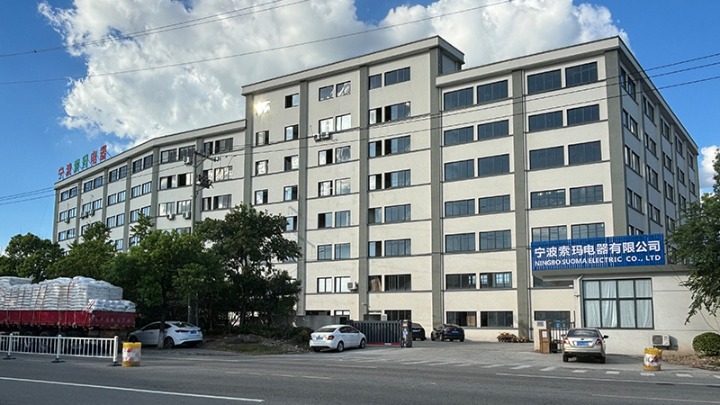
Headquartered in Ningbo, Zhejiang—adjacent to the world-class Ningbo-Zhoushan maritime deepwater port—Sykra has engineered, molded, and assembled international power sockets for over 8 years. As a TÜV Rheinland on-site verified production facility, we maintain uncompromising vertical manufacturing sovereignty.
Frequently Asked Questions by U.S. Importers & Brand Owners
Direct technical and commercial clarity addressing electrical compliance, tariffs, minimum orders, and customization cycles.
Q: Can Sykra adapt the European Cube and Tower designs shown to standard US NEMA 5-15R specifications?
A: Absolutely. While our standard catalog highlights our high-volume EU Schuko and French-type production bases, our core tooling architecture is modular. We maintain dedicated NEMA 5-15R (125V~ 15A 60Hz 1875W) insert tooling, integrated with 14AWG / 16AWG SJT heavy-duty grounded power cords terminating in standard straight or flat low-profile 90° US plugs. Internal busbars are re-engineered for American electrical current density standards.
Q: What is the regulatory distinction between UL, ETL, and FCC markings for selling on Amazon or in brick-and-mortar retail?
A: In the United States, OSHA (Occupational Safety and Health Administration) recognizes both Underwriters Laboratories (UL) and Intertek (ETL) as Nationally Recognized Testing Laboratories (NRTLs). Both test to identical standards: UL 1363 for power taps and UL 62368-1 for the integrated USB/wireless DC power sub-assemblies. Retail platforms like Amazon and major retail chains accept either UL or ETL marks unconditionally. FCC Title 47 Part 15 / Part 18 is mandatory by federal law for electromagnetic emissions, which we verify via accredited third-party laboratories.
Q: What is the Minimum Order Quantity (MOQ) for custom private-label branding and custom colorways?
A: Unlike legacy conglomerates requiring 3,000–5,000 units per run, Sykra supports agile brand development. We offer standard OEM private labeling (laser-etched logos, Pantone matched enclosure trim, and custom multi-color retail packaging) starting at only 200 to 500 units on select models. For custom mold tooling or bespoke chassis ODM engineering, our entry threshold starts at 1,000 units with amortized mold tooling credit options.
Q: How does Sykra handle thermal management when both the AC outlets and 15W wireless pad are operating at maximum load?
A: We engineer for worst-case thermal envelope scenarios. Our internal layout physically separates the AC high-draw phosphor-bronze busbars from the DC logic board. If continuous inductive charging drives transmitter surface temperatures past 42°C, our onboard MCU employs step-down frequency modulation, temporarily shifting the charging coil from 15W to 10W or 7.5W until equilibrium is restored, ensuring complete enclosure stability well below UL safety ceilings.
Q: What Harmonized Tariff Schedule (HTS) codes apply to these hybrid wireless extension sockets?
A: Products in this category typically fall under HTS Code 8537.10.9170 (Boards, panels, consoles, desks, cabinets and other bases, equipped with two or more apparatus of heading 8535 or 8536, for electric control or the distribution of electricity) or HTS 8504.40.8500 for integrated power converter assemblies. We advise coordinating with your licensed customs broker, and our export logistics team provides exact packing lists, commercial invoices, and tariff sub-headings to ensure seamless clearance at U.S. ports of entry (LA/Long Beach, NY/NJ, Savannah).
Q: What is your factory's production lead time from sample sign-off to container loading?
A: Rapid 3D SLA prototyping and functional golden samples are delivered within 7 to 10 business days. Upon final engineering sign-off and PO deposit, mass production takes 25 to 35 calendar days. For recurring orders with blanket forecasts, we can maintain pre-molded housings and localized raw components in stock, shortening ship dates to under 15 business days.
Q: Does your wireless extension socket feature over-voltage and surge protection suitable for sensitive electronics?
A: Yes. Our surge-protected tiers incorporate metal oxide varistors (MOVs) rated from 1080 to 1800 Joules, combined with high-temperature thermal cutoffs. This clamps electrical surges caused by grid instability or lightning transients within nanoseconds, shielding expensive workstations, computers, and medical equipment from catastrophic over-voltage spikes.
Q: Can third-party inspection firms (e.g., SGS, AsiaInspection/QIMA, Bureau Veritas) audit our production batch prior to shipping?
A: We operate an open-door policy for verified procurement partners. As a TÜV Rheinland audited factory, our facility, labor standards, calibration registries, and testing logs are open to third-party inspectors at Level II AQL 1.0/2.5 standards prior to carton sealing and container loading.